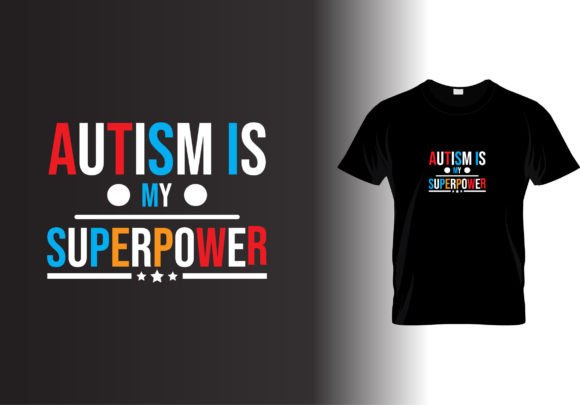
Autism T-Shirt Design: Graphics for Purpose-Driven T-Shirt Designs
As a graphic designer who’s built brand identities for neurodiversity nonprofits, inclusive apparel startups, and handmade wellness brands, I recently evaluated the Autism T-Shirt Design for a real client project: a limited-edition capsule collection launching alongside Autism Acceptance Month. This wasn’t a speculative download—I needed a design asset that could carry emotional resonance, scale across product types, and uphold visual integrity in both digital and physical formats.
A First Impression That Prioritizes Warmth Over Cliché
The Autism T-Shirt Design lands with quiet confidence—not loud, not clinical, not overly symbolic. It avoids stereotypical puzzle pieces or ribbon motifs, opting instead for soft organic shapes, balanced negative space, and a gentle color rhythm that feels inclusive rather than prescriptive. The mood is calm but intentional—ideal for brands rooted in empathy, education, or community care. It reads as modern design, not clipart; as illustration, not generic stock. That distinction matters when you’re building trust with an audience that values authenticity over aesthetics alone.
Where This Graphic Design Asset Earns Its Place in Real Projects
In practice, the Autism T-Shirt Design excels where emotional clarity meets functional versatility. For our client’s capsule line, it worked flawlessly as the hero graphic on t-shirt fronts, tote bags, and ceramic mugs—especially when applied via sublimation. Its 4500×5400 PNG resolution held crisp detail at large print sizes, while the included SVG and EPS files allowed precise resizing for embroidered patches and packaging labels.
- Product mockups: Stands out cleanly on neutral fabric swatches and lifestyle shots—no pixelation, no jagged edges.
- Social media graphics: Scales beautifully into Instagram carousels and Pinterest pins; its balanced composition supports text overlays without competing.
- Cricut projects & printable designs: The SVG path is clean and fully editable—no stray anchor points or embedded raster layers. Perfect for customizing with names or dates in a handmade business context.
- Packaging design & stickers: Works as a subtle watermark on tissue paper or as a die-cut sticker—its transparency in the PNG file is flawless.
- Editorial design & web design: Functions elegantly as a decorative accent in blog headers or campaign landing pages—adding warmth without overwhelming typographic hierarchy.
Contexts That Demand Extra Scrutiny
This isn’t a one-size-fits-all graphic design asset. Its gentle aesthetic doesn’t translate well to ultra-minimalist branding (think monochrome luxury skincare) or high-contrast corporate materials where bold typography dominates. Use it carefully in:
- Crowded layouts—its subtlety can get lost next to dense copy or busy photography.
- Small-scale applications like app icons or favicons—the fine details soften below 200px.
- Low-contrast backgrounds—always test the PNG on light gray, cream, and charcoal to confirm legibility.
- Professional healthcare branding—unless intentionally aligned with patient-centered messaging, it may feel too informal for clinical contexts.
How It Shapes Brand Consistency and Audience Connection
What makes the Autism T-Shirt Design valuable isn’t just its technical quality—it’s how it influences perception. When paired with warm sans-serif typefaces (like Poppins or Nunito), it reinforces approachability. Against serif body copy, it adds human texture. With script fonts, it grounds whimsy in sincerity. It strengthens visual hierarchy by serving as a focal point that invites pause—not shout.
For Etsy product listings or print-on-demand shops, this design elevates perceived value. Customers don’t just see a t-shirt—they see intention. That builds recognition and repeat engagement. And because it’s designed with commercial license clarity in mind, it fits seamlessly into small business branding workflows without legal friction.
Practical Designer Notes Before Deployment
Before clearing this asset for client use, I ran these checks:
- Converted to grayscale—confirmed no critical detail vanishes in B&W reproduction.
- Tested on five background tones—light beige, oat milk, navy, heather gray, and black—to verify contrast ratios meet WCAG AA standards.
- Previewed at three sizes: 2” (sticker), 12” (tote bag), and full-bleed (wall art)—no distortion or unintended cropping.
- Placed on realistic mockups—not just white tees, but textured organic cotton and slub-knit fabrics—to assess tactile harmony.
- Print-tested on two substrates: cotton jersey and ceramic mug—confirmed color fidelity and edge sharpness.
- Reviewed all file formats: EPS opens cleanly in Illustrator, SVG retains layers and naming conventions, PNG has true alpha transparency—no matte fringing.
- Compared font pairings: works with display fonts for campaign banners, sans-serifs for product tags, and even restrained handwritten fonts for greeting cards—never clashes.
- Verified commercial license scope: confirmed usage covers resale, POD platforms, digital ads, and physical merchandise—no attribution required.
Final Verdict: A Thoughtful Creative Marketplace Addition
The Autism T-Shirt Design isn’t flashy—but it’s reliable, emotionally intelligent, and technically sound. It serves designers who prioritize meaning alongside method, and clients who need more than decoration—they need resonance. Whether you’re crafting a Canva template for educators, developing a sticker design series for a neurodivergent-led podcast, or building a cohesive visual language for a seasonal campaign, this asset delivers quiet professionalism. Welcome to my t-shirt design store. You can use them for creating products such as sublimation t-shirts, mugs, bags, and more—this design gives you EPS, SVG, and high-res PNG files built for real-world application. In a crowded creative marketplace, that kind of thoughtful execution is rare. And worth every pixel.