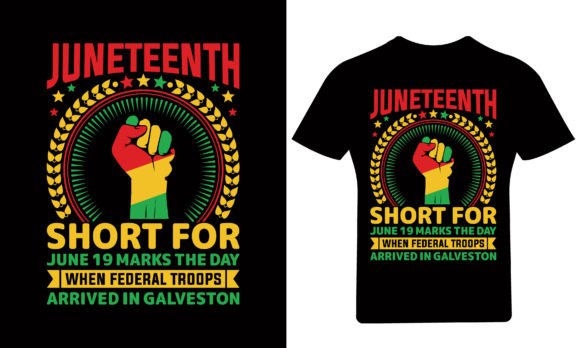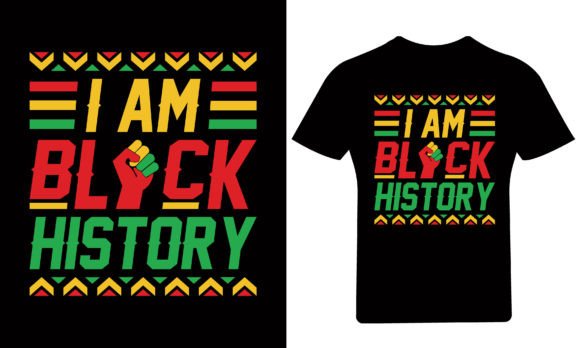
I AM BLACK HISTORY Juneteenth Graphics & T-Shirt Designs
As a brand designer and content marketer who’s helped over 200 small businesses refine their visual voice, I opened I AM BLACK HISTORY Juneteenth expecting boldness—and got resonance. This isn’t just another Juneteenth T-Shirt design. It’s a tightly composed, emotionally grounded graphic design asset that lands with clarity, dignity, and quiet power. In a sea of decorative clipart and overdesigned illustrations, it breathes space, intention, and cultural weight.
First Impression: Dignity Over Decoration
The moment you preview the transparent PNG or open the AI file, what stands out is its restrained strength. The phrase “I AM BLACK HISTORY” sits centered—not shouting, but declaring. There’s no clutter, no forced symbolism, no gradient overload. The typography feels deliberate: strong, legible, and rooted in modern design sensibility. It evokes editorial confidence—like a headline in The Root or a cover feature in Essence. For brands building lifestyle content, event promotions, or mission-driven product launches, this sets an immediate tone of authenticity and respect.
Where It Elevates Real Marketing Workflows
Last month, I used I AM BLACK HISTORY Juneteenth to refresh a client’s seasonal content kit—a digital product for Black educators launching a Juneteenth curriculum bundle. We embedded it into Canva templates for Instagram posts, Pinterest pins, and email banners. The SVG design scaled flawlessly across devices; the EPS file locked cleanly into their print-ready packaging inserts. Because the asset includes layered vector files and a high-res transparent PNG (450×5400), we repurposed it without distortion—from hero graphics on their Shopify homepage to subtle accents on downloadable lesson cards.
It performed especially well in contexts where emotional connection matters more than literal explanation: social media covers, blog headers, and lead magnets. Unlike generic clipart, it didn’t dilute their brand identity—it reinforced it. When paired with their existing serif font and deep indigo palette, the design created stronger visual hierarchy and improved audience trust. Readers didn’t just see a graphic—they recognized intention.
Strategic Fit Across Brand Touchpoints
I AM BLACK HISTORY Juneteenth shines where branding meets storytelling:
- Social media graphics: Works as a standalone Instagram post or layered over photo backgrounds for Facebook ads and digital ads.
- Pinterest pins & editorial layouts: Its vertical ratio and clean negative space make it ideal for scroll-stopping content marketing visuals.
- Product labels & merchandise: As a Juneteenth T-Shirt design, it prints crisply on cotton, tri-blends, and even tote bags—no pixelation, no color bleed.
- Branded templates & content bundles: Easily dropped into Canva templates, web design mockups, or printable design kits for coaches and creators.
- Digital product visuals: Serves as a focal point in sales pages, media kits, and launch emails—enhancing professional branding without competing with copy.
Where to Use It With Intention
This graphic design asset thrives in expressive, values-aligned spaces—but it’s not universally flexible. Avoid placing it in formal corporate branding (e.g., annual reports or investor decks), dense information layouts, or text-heavy ads where its declarative tone could overwhelm supporting messaging. It also needs breathing room: don’t shrink it below 200px wide on mobile, and avoid low-contrast backgrounds that mute its impact.
It’s less effective in overly minimal brands that rely on ultra-thin fonts or monochrome palettes—unless intentionally juxtaposed for contrast. And while it’s powerful as a campaign header or product launch visual, it shouldn’t serve as a logo design or primary brand mark unless your identity centers squarely on Juneteenth storytelling.
Practical Brand Designer Notes
Before deploying I AM BLACK HISTORY Juneteenth, run these checks:
- Test against your brand color palette: Does it hold up next to your primary and secondary hues? Try it on light, dark, and textured backgrounds.
- Verify black-and-white usage: Print a test swatch—does the weight hold in grayscale? (Spoiler: Yes, thanks to its robust stroke and spacing.)
- Mock it in context: Drop the SVG design into real campaign mockups—email banners, Instagram Stories, packaging flats—to assess balance and scale.
- Preview on mobile: Check readability at thumbnail size—especially the transparent PNG version.
- Compare to competitor visuals: Does it stand out for clarity and calm authority—not noise?
- Font pairing test: Try it with your brand’s serif, sans serif, script, and display fonts. It pairs best with grounded, humanist typefaces—not overly ornate or fragile scripts.
- Confirm commercial license: This is a commercial design—ideal for client work, paid campaigns, and small business branding—but always verify terms before resale or mass distribution.
Why It’s a Smart Addition to Your Design Assets
In today’s saturated creative marketplace, small business branding depends on assets that do more than look good—they communicate values, simplify decisions, and accelerate production. I AM BLACK HISTORY Juneteenth delivers that. It’s not just a printable design or SVG illustration; it’s a ready-made piece of narrative infrastructure. Whether you’re a blogger building a Juneteenth content series, a product creator launching limited-edition merchandise, or a digital seller curating a design bundle, this asset saves time while raising the bar on emotional resonance.
It supports stronger first impressions, clearer visual hierarchy, and more memorable campaign visuals—all without demanding custom illustration or complex layout work. That’s rare. And valuable.
A Final Thought for Creative Entrepreneurs
If your brand speaks to culture, community, or conscious consumption, I AM BLACK HISTORY Juneteenth isn’t just decoration—it’s alignment made visual. Used thoughtfully, it strengthens recognition, deepens audience trust, and signals that your marketing isn’t transactional. It’s participatory. Respectful. Human. That’s how modern design earns attention—and how small business branding builds legacy.